Mark Ritson’s biggest takeaway at Cannes is a good old-fashioned jingle.
Mark Ritson spoke at Cannes Lions this June and revealed that the “single f***ing best thing you can do for your advertising is….”
Add sound.
Well, more specifically, have a jingle.
I’m ecstatic to hear a person of his caliber confirm what my colleagues and I have known for years.
Sound matters!
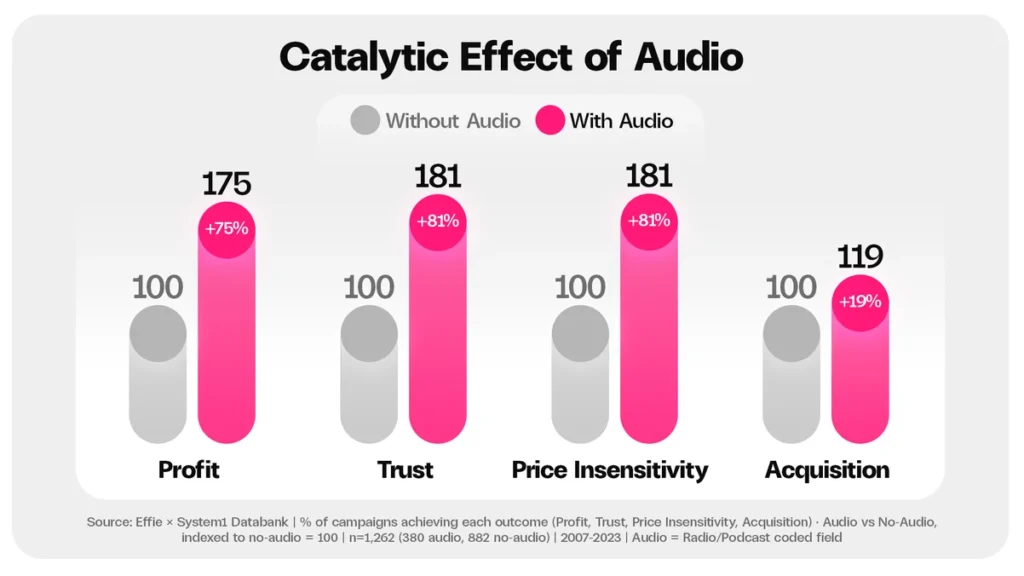
On a blistering hot day in the south of France, Mark Ritson stood on a stage and told marketing heads and agency leaders to stop over-complicating things and go back to the basics with audio. According to System1 and Effie’s research, audio increases trust by 81%, profit by 70%, and acquisition by 19%. These findings were built from their data of 1,250 campaigns over a period of 17 years.
This is not new news. Good old-fashioned audio has been proven to stimulate growth, recognition, and trust in brands for years (see my citations below). It’s just always been taken for granted.
Taking Audio For Granted
Brands continue to spend their budget on either a lacking audio support system or simply nothing at all.
The focus remains on licensing and leveraging an existing song or artist’s brand identity instead of investing in custom and unique to the brand itself.
The audio spend is saved till post production where it’s treated as icing on the cake, rather than the baked in strategical asset that it is.
The songs are chosen by preference and tastes rather than consulting brand identity guidelines or even the consumer’s preferences.
The budget is distributed to only visual marketing, leaving little to nothing left for any sort of audio activation.
Audio branding is treated like a “nice to have” instead of a critical building block for longterm ROI.
A Jingle Isn’t a Bad Word
Generally, a jingle has been labeled as “hokey” and outdated. Maybe it’s because the jingle’s heyday, the 70s and 80s, didn’t give us the highest quality sounds (ex., 8-bit and other early synth). Maybe it was simply that they burned us out on the whole idea due to the sheer volume of audio output. Whatever the reason may be, one thing remains true about jingle-jiving.
Every jingle I heard on the radio and TV as a kid is a jingle I still remember and recite to this day.
40+ years of cold, hard, long-term recognition is absolute gold when you’re speaking in marketing and advertising terms.
But it doesn’t stop there.
Not only can I recite these jingles verbatim, but I also know the brand associated with it, can recall the experience of walking its aisles, and even associate brand colors and sometimes tastes and smells. All as a result of hearing a “hokey” jingle.
When it comes to long-term ROI, there’s nothing better than a good old-fashioned jingle.
Mark’s point was to stop overlooking an old friend. Sound and music can go along with and even reinforce our obsession to be “ground-breaking”. With the right sonic branding, a brand can become iconic and deeply rooted in culture.
It’s an unfair advantage hiding in plain sight. — Mark Ritson
The Cornerstone Jingle
The way I see it, a jingle is the cornerstone; a foundational piece to a solidly built house. With it, sonic branding building blocks are built more easily and more securely.
Audio is one of the most under-appreciated brand assets. — Moos Lamerus, MassiveMusic
The word “old-fashioned” has trapped the jingle for decades in this stigma that “old” can’t go with “new”. But that simply isn’t true. Old is familiar and trusted and grounded in brand origin. Familiarity, trust, and connection are the main reasons a consumer chooses one brand over another.
The old establishments make new ideas possible.
If the word “jingle” sounds too Baby Boomer for you, then let’s look to its GenZ counterpart, “sonic branding”. A different name for the modern evolution of sound strategy. Sonic branding operates like a jingle but with a different intention (brand identity rather than campaign one-offs). These logos are highly effective, fit over every aspect of a brand’s marketing ecosystem, and could never have happened without the existence of the “hokey” jingle first.
Those of us specifically focused in the sonic branding industry can take that jingle and transform it into hundreds if not thousands of sonic assets that can play over the brand’s entire marketing and advertising playground. We build UX design, soundscapes, theme songs, logos, hold music, music libraries and playlists of content, style guides to allow for existing music usage, and the list goes on. We build systems and train brand managers how to use those systems consistently and effectively.
Sound systems and strategy create the connection, engagement, trust, and loyalty that every brand needs.
Old-fashioned is where we start. From an old, established, and reputable thing, we can then build new ideas that correlate with current culture and modern thinking. If the cornerstone is not in place with the brand’s foundation, these new ideas will never take root. New ideas must be relevant to brand identity. Relevance builds the trust and connection that make a customer a customer. Lose that earned trust, you lose the customer.
New ideas never last when they ignore the origin story.
Sonic or visual logo alike, when you mess with a brand’s established identity, you risk entirely alienating your customer base.
The Old Man and the Barrel
Take Cracker Barrel, for example.
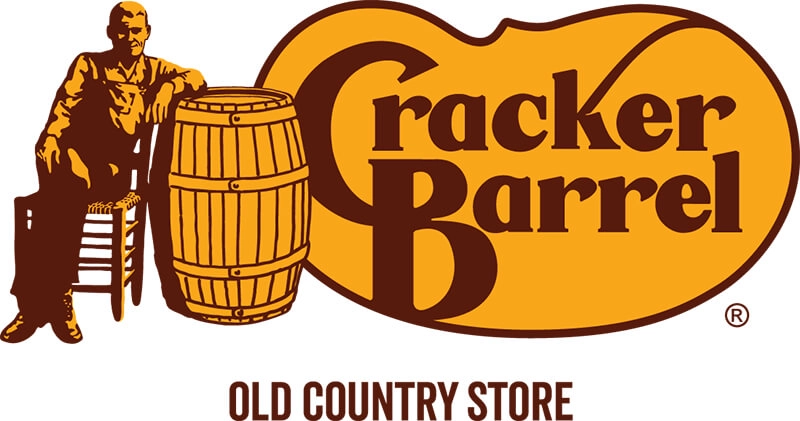
In 2025, Cracker Barrel offended all its loyal customers by taking the old man and his famous barrel off its logo. The effect was immediate, and their stock plummeted. They tried to argue it away and explain their decision, but the customers wouldn’t have it. Within seven days, the old-timer and his barrel were back.
Too much “new” offends trust in a brand and tanks market share.
To some, the logo was still the same color and relatively the same shape. But to the devoted fan, the man and the barrel were everything. The brand was a trusted Southern and Midwestern brand, and by omitting the images, it felt like the heart of the restaurant had been erased.
The origin story was gone.
Back to the Audio
Mark Ritson’s speech and System1’s findings are nothing new. They just come at a time that people might finally be ready to listen.
A jingle is just one expression of a much larger audio ecosystem. This ecosystem includes sonic logos, functional sounds, themes and soundscapes, and a plethora more both known and yet to be discovered. I could go into more detail but I think I’ll save it for my follow-up articles instead.
For now, I leave you with these thoughts to think:
What does your brand sound like?
Is it loud or soft-spoken?
Is it rhythmic or off-beat?
Is it absolutely silent (probably not)?
What could your brand sound like?
What would you want it to sound like?
We are a disjointed, distracted, and overstimulated world. We have too much coming at us all at once. The last thing we need is a bunch of noise.
Sing your story, establish your relevance, and make that sound on purpose.