Podcast Episode- Coming Soon
You’ve just left the office. It’s been a long day, and dinner plans are nonexistent. Going to the grocery store is the last thing you feel like doing.
You open the Taco Bell app and customize a few Luxe boxes, add a bunch of soft and hard tacos for the kids, and an extra bean burrito for good measure. The kids will be happy, and you won’t have to worry about dishes tonight.
You go to purchase and hear this reassuring sound.
“Bong!”
Most Taco Bell aficionados know its official/unofficial sonic logo: the “Bong!”. It’s the subtle yet specific sound for, as the movie Demolition Man presents, fine dining at its best (if you haven’t already, you need to watch that movie).
For years, the “Bong!” was only in broadcast ads. Recently, however, it has joined the digital space as the purchase sound on the Taco Bell app.
Why the “Bong!” Works
It’s short, memorable, and in that sweet spot of frequencies. Traditionally, a church bell has symbolized the beginning of a church service. However, through consistency and clever marketing, Taco Bell has created a separate connotation for the sound: tacos.
Prior to 1989, a church bell had nothing to do with food. But now that one short “Bong!” gives us a major craving for tacos.
The Story Behind the Church Bell
Non-sensical as church bells and tacos may seem, it didn’t completely come out of left field.
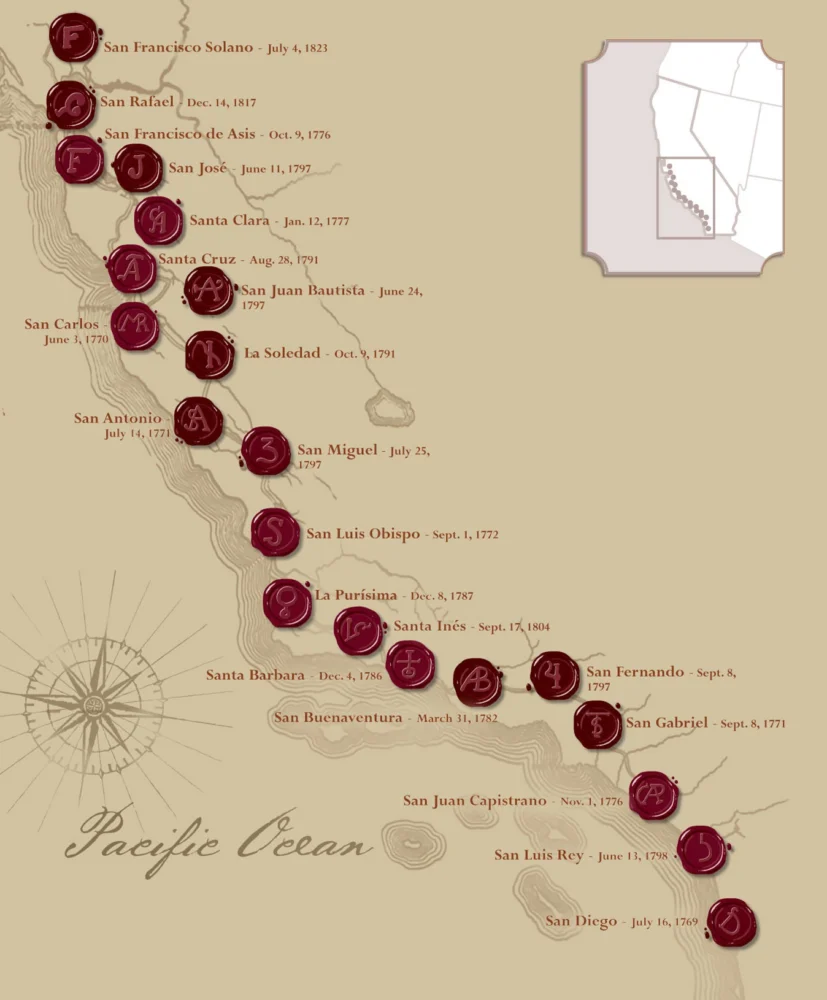
Those familiar with California history know about the Spanish Missions that stretch from San Francisco down to San Diego. Dating back to the 1600s, these buildings were a familiar tie to Mexico (during its time under Spanish rule) and the western side of North America.
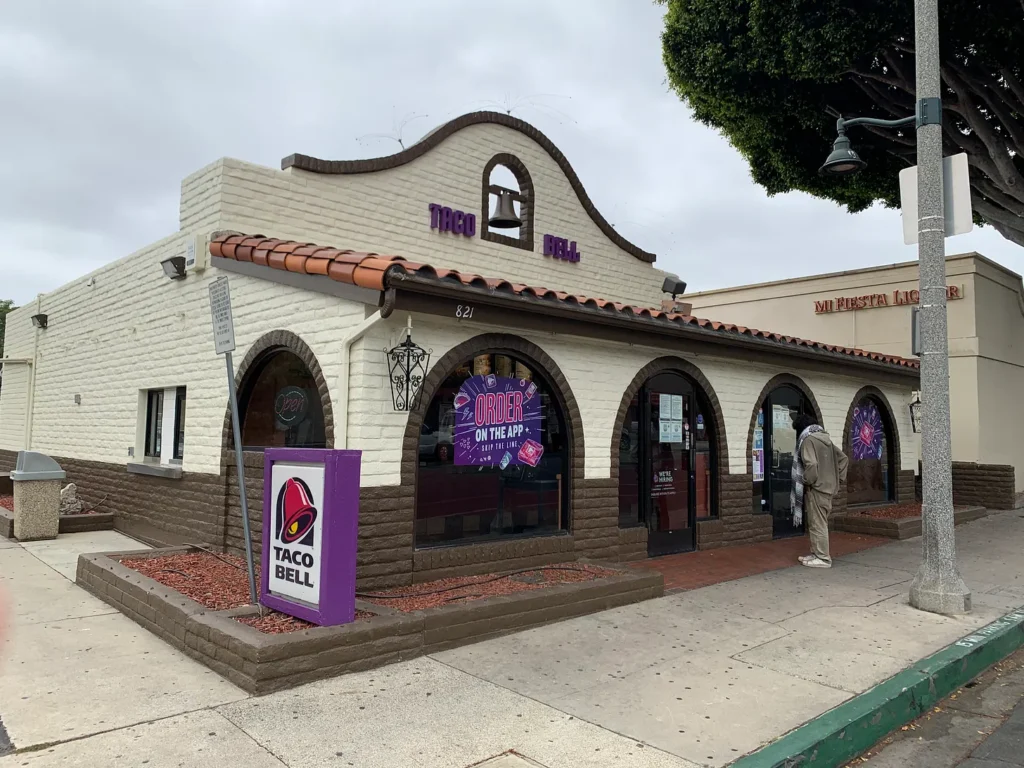
Taco Bell originated in California in the 1960s, with pretty much every location looking like this.
As you can see, the church bell has always been a part of the architectural design. But it was silent until 1989 when the Yamaha DX7 synthesizer brought the sound to life.
The “Bong!” Goes Digital
This iconic sonic logo doesn’t just bookend commercial campaigns; it also serves as a very effective notification tone for the Taco Bell app.
In case you haven’t used it recently or at all, let me walk you through the experience.
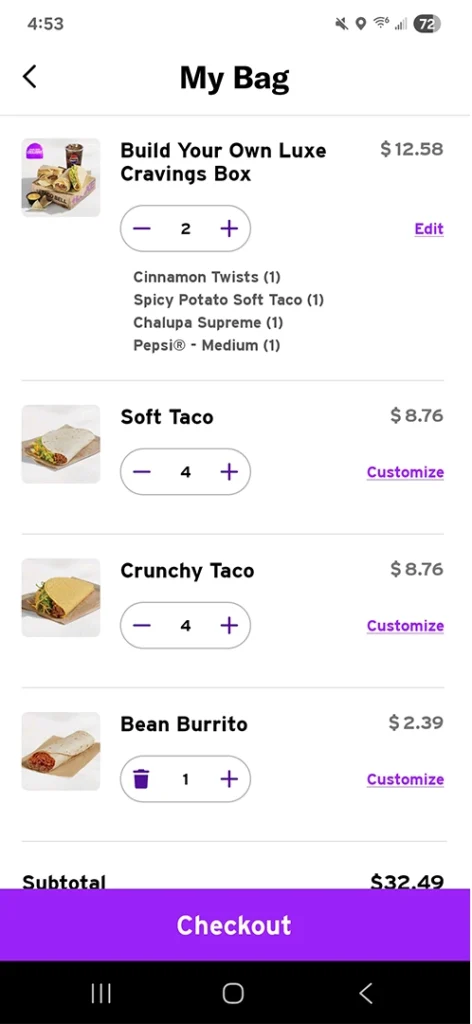
You’re placing your order.
Once satisfied, you go to check out.
You hit “Checkout” (don’t forget your hot sauces)
Put in your credit card
Select “Place Order.”
“Bong!”
How satisfying! What a conclusion! Without a word, the app has relayed two messages to you at once: that the order is complete and that dinner is covered.
Yo Quiero Taco Bell
This isn’t the first clever marketing Taco Bell has done.
Does anyone remember, “Yo Quiero Taco Bell”?
If that phrase brought a smirk to your face, then you’re probably reliving the memory with me right now. In the 90s and early 2000s, a Spanish-speaking Chihuahua was famous for the same thing the “Bong!” is famous for today: making you want a taco (literally what the dog is saying).
In a way, this was another form of sonic branding for the brand. The dog’s voice was instantly recognizable. So much so that all he’d have to say is, “Yo quiero”, and the listener could finish the rest.
Making the dog a Spanish-speaking mascot searching for a taco — just made sense.
Where the Taco Bell “Bong!” Rings Flat
Although the “Bong!”, “Yo Quiero, Taco Bell”, and the mission-style facade rings true for those of us from the 1900s (yup, I went there); it may not resonate for the younger crowd.
For those unable to work a cassette player or dial a rotary phone, the “Bong!” may ring flat.
With that being said, a teen of today could hear the “Bong!” while purchasing on the Taco Bell app and only register it as “another app sound”. The brilliance of the callback would be lost.
When you take out the nostalgia and decades of repetition, unlike Kentucky Fried Chicken Rain, there is no logical tie to tacos and church bells.
Annoyance could also be a factor.
During my research, I did find multiple Reddit threads where people hated the “Bong!”. Remember Netflix “Ta-Dum” and COVID? People got super annoyed with that as well.
Repetition in general is tricky. It is a very fine line to find a sound that is never annoying and always what people want to hear. What it basically comes down to is brand identity.
Is the brand committed to that sound, sight, smell, touch, or taste? If so, own it. But be sure to update and pivot when necessary.
Sound and sensory are subjective. Always be sure that your brand is well aligned.
The Branding Takeaway
I believe that Taco Bell’s constant and sometimes subtle “tweaking” is how it’s remained on top and topical all these years. It’s not afraid to try something different from time to time. An attitude I think every big business should embrace.
When it comes to multi-billion dollar companies like Taco Bell, there is always “money in the banana stand”. So, big business, spend it! You never know. You might knock one out of the park. And if you don’t, well, we all know a drip coffee doesn’t ACTUALLY cost $5.
With those kinds of profit margins, you’ll be fine.
75 Cents For Taco Bell From This Sound Strategist
Here are just a few ways that I could see Taco Bell moving its sonic branding forward and building nostalgia with a younger generation.
- When using licensed music in broadcast ads, be sure to consistently use the “Bong!” at the end. Mostly this is done, but not always.
- Create TikTok challenges showing how the “Bong!” brings you to dinner. This could get really silly or really weird. The point is exposure and pop culture relevance.
- Writing an entire song incorporating the “Bong!” strategically and consistently throughout. Maybe it’s subtle, maybe it’s overt. The world is your taco- crunch on it a bit.
- More functional sounds for the app. For example, there could be a flat “Bong!” tone for a user error, two “Bong!”s for a duplicate order in cart, and a “Bong!” for opening the app itself. The danger here is sound fatigue, so tread lightly.
- Speaking of evolving and repurposing, the “Bong!” could be changed to a human speaking/singing it. For example, speaking “Bong!” could result in a taco landing in your hand (think State Farm’s- Can I Get a Hot Tub commercial).
Other Companies Take Note
Sensory marketing can be expensive but it is also extremely rewarding for your bottom line. Why? Because the more someone “feels” like a taco or “can taste” a chalupa just by hearing a sound, the better your longterm ROI becomes. (I have a ridiculous amount of data to back me up on this.)
Sound in sensory is a relatively inexpensive way to get that desired impactful response. Sound is accessible and available and incredibly impactful to us all.
So ponder on that the next time the “Bong!” summons you to dinner.
The world is your taco…grab it with both hands.
